Last Modified on November 27, 2026 by Dr. Tyler Meier

Understanding tension headache vs. migraine can help you recognize symptoms and find appropriate relief. Tension headaches typically cause steady pressure, while migraines often involve throbbing pain, nausea, and sensitivity to light or sound.
At our Chiropractic in Newport Beach, CA, we help patients address neck tension and related musculoskeletal discomfort that may occur alongside headaches.
What is the difference between a tension headache and a migraine?
The main difference between a tension headache and a migraine is the type of pain and the symptoms that come with it.
Tension headaches usually cause mild to moderate pressure or tightness around the head. Migraines often cause moderate to severe pain and may include nausea, vomiting, or sensitivity to light and sound.
The table below highlights the most common differences.
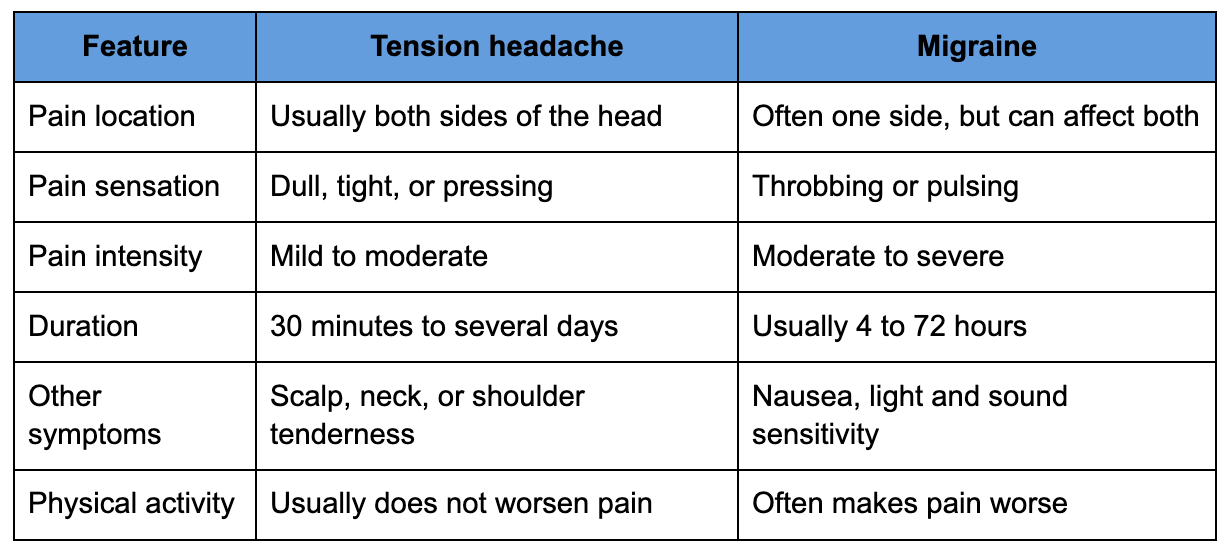
These patterns can help you recognize your symptoms, but they are not enough to confirm a diagnosis. Some people experience overlapping symptoms or have both headache types.
What are the symptoms of a tension headache?
Tension headaches are among the most common types of headaches. They typically cause steady discomfort rather than sharp or pulsing pain.
Common tension headache symptoms include:
- Pressure around the head: A feeling of tightness, sometimes described as a band squeezing the forehead.
- Dull, aching pain: Mild to moderate discomfort that may affect both sides of the head.
- Neck and shoulder tenderness: Tight or sensitive muscles around the neck, scalp, and shoulders.
- Pain without nausea: Tension headaches generally do not cause nausea or vomiting.
- Limited disruption to activities: Most people can continue their usual routines, although discomfort may affect concentration.
Tension headaches can last from 30 minutes to several days. Frequent episodes may interfere with work, sleep, and daily comfort.
Neck discomfort can also occur alongside other headache conditions. Understanding the relationship between neck pain, headaches, and dizziness may help you recognize when symptoms need further evaluation.
What are the symptoms of a migraine?
A migraine is a neurological condition that causes recurring attacks of head pain and other symptoms. Unlike tension headaches, migraines often make normal activities difficult.
Common migraine symptoms include:
- Throbbing or pulsing pain: Often affects one side of the head, although pain can occur on both sides.
- Nausea or vomiting: Digestive discomfort may develop during an attack.
- Sensitivity to light and sound: Bright environments or loud noises can make symptoms harder to tolerate.
- Pain with movement: Walking, climbing stairs, or other routine activities may worsen the headache.
- Visual or sensory changes: Some people experience temporary disturbances called migraine aura.
Migraine aura may include flashing lights, blind spots, tingling, or difficulty speaking. However, not everyone with migraines experiences aura.
A migraine attack typically lasts between 4 and 72 hours when untreated or unsuccessfully treated. Some people also experience fatigue, mood changes, or difficulty concentrating before or after an attack.
What causes tension headaches and migraines?
Tension headaches and migraines have different underlying mechanisms, although some triggers overlap.
Identifying your personal triggers can help you understand headache patterns and make informed decisions about prevention.
Common triggers of tension headaches
The exact cause of tension headaches is not fully understood. Changes in how the nervous system processes pain may play a role, especially in frequent headaches.
Common contributing factors include:
- Emotional stress and anxiety
- Poor sleep quality
- Muscle tenderness around the head and neck
- Prolonged computer use without breaks
- Physical fatigue and daily tension
Neck stiffness and muscle tenderness may occur alongside tension headaches. However, poor posture alone does not explain every headache.
Common migraine triggers
Migraines involve complex changes in the nervous system. Genetics and individual sensitivity can influence who develops migraines.
Common migraine triggers include:
- Changes in sleep schedules
- Hormonal fluctuations
- Stress or sudden relaxation after stress
- Skipping meals or dehydration
- Bright lights, strong smells, or loud sounds
- Certain foods or drinks in susceptible individuals
Not every trigger causes a migraine in every person.
Keeping a headache diary can help you identify patterns involving sleep, meals, stress, symptoms, and headache frequency.
How to relieve tension headaches and migraines
Relief depends on the type of headache, symptom severity, and individual health needs. Some home strategies may help both conditions, but migraines often require more specific treatment.
Relief options for tension headaches
Mild or occasional tension headaches may improve with simple changes to daily habits.
Consider these approaches:
- Manage stress: Try relaxation exercises, slow breathing, or short breaks during demanding activities.
- Apply heat or cold: A warm compress on the neck or a cool compress on the forehead may provide temporary comfort.
- Practice gentle movement: Light neck and shoulder stretches may help ease associated muscle tension.
- Improve sleep habits: Maintain a consistent sleep schedule and create a comfortable sleeping environment.
- Use medication appropriately: Over the counter pain relievers may help occasional headaches when used as directed.
If headaches occur frequently, professional evaluation can help identify contributing factors and appropriate treatment options.
Relief options for migraines
Managing migraines often involves relieving symptoms, identifying triggers, and following appropriate medical treatment.
Helpful strategies may include:
- Resting in a quiet, dark room during a migraine attack
- Staying hydrated and eating regular meals
- Maintaining a consistent sleep schedule
- Taking prescribed migraine medication as directed
- Considering preventive treatment with a healthcare professional if migraines occur frequently
Frequent use of pain medication may lead to medication overuse headaches. Follow recommended dosages and consult a healthcare professional if you need headache medication regularly.
Can chiropractic care help with headache related neck tension?
Neck stiffness, muscle tenderness, and limited movement can occur alongside certain headaches. When these musculoskeletal symptoms are present, chiropractic care may be considered as part of a broader approach to managing discomfort.
At CorePosture Chiropractic, we focus on assessing spinal function, posture, and movement to understand each patient’s individual needs.
Depending on the assessment findings, our approach may include:
- Evaluating neck mobility and spinal movement
- Identifying muscle tension and postural strain
- Providing individualized chiropractic care when appropriate
- Recommending exercises and daily movement strategies
Some conservative treatments may help selected patients with headache related musculoskeletal discomfort. However, chiropractic adjustments are not an established cure for migraines, and neck treatment should not replace appropriate medical evaluation.
We emphasize personalized care based on symptoms, health history, and individual goals.
When should you see a doctor for headaches?
Occasional headaches are common, but persistent or changing symptoms deserve medical attention.
Schedule a medical evaluation if you experience:
- Headaches that become more frequent or severe
- A noticeable change in your usual headache pattern
- Head pain that regularly interferes with work or sleep
- Headaches that require frequent pain medication
- New headaches with symptoms you have not experienced before
Seek emergency medical care immediately if you develop a sudden, extremely severe headache or a headache accompanied by weakness, confusion, difficulty speaking, fever with a stiff neck, or sudden vision loss.
These symptoms may indicate a serious medical condition that requires urgent evaluation.
Understanding your headaches and finding the right care
Understanding the difference between tension headaches and migraines can help you recognize symptoms and find appropriate care.
At CorePosture Chiropractic, Dr. Tyler Meier, DC provides personalized chiropractic care focused on spinal mobility, posture, and musculoskeletal discomfort. If your headaches occur alongside neck stiffness or muscle tension, we can assess your symptoms and recommend suitable care options.
Contact us today to schedule an appointment and learn how we can support your spinal health and overall comfort.
Frequently asked questions
Can a tension headache turn into a migraine?
A tension headache does not directly turn into a migraine. They are different headache disorders, but a person can experience both, and their symptoms may overlap.
Can you have both tension headaches and migraines?
Yes. Some people experience both headache types at different times. Tracking pain patterns, associated symptoms, and triggers can help a healthcare professional distinguish between them.
How long do tension headaches and migraines last?
Tension headaches may last from 30 minutes to several days. Untreated migraine attacks typically last 4-72 hours, although duration varies.
How can you naturally relieve a migraine?
Resting in a dark, quiet room, staying hydrated, and maintaining regular sleep habits may help. However, moderate or severe migraines often require medical treatment.

Dr. Tyler Meier is a board-certified, licensed chiropractor and founder of CorePosture Chiropractic in Newport Beach, CA