Last Modified on October 21, 2026 by Dr. Tyler Meier
Scoliosis in Teenagers: Signs, Symptoms and Treatment Options
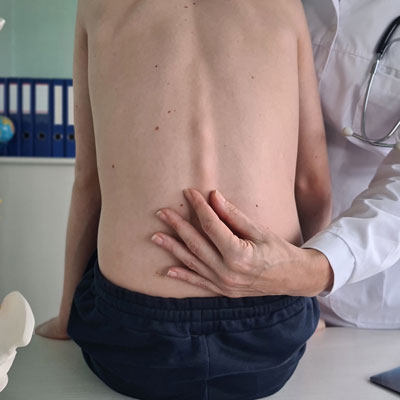
Scoliosis in teenagers is a sideways curve of the spine that often becomes noticeable during periods of rapid growth. Many teens have no pain, so parents may first notice uneven shoulders, uneven hips, or changes in posture.
Early evaluation can help determine the size of the curve, how much growth a teen has remaining, and whether monitoring or treatment may be needed. At CorePosture Chiropractic, we evaluate spinal alignment and posture to help families understand appropriate conservative care options.
What is scoliosis in teenagers?
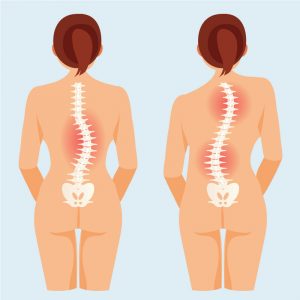
Scoliosis causes the spine to curve sideways instead of appearing straight when viewed from behind. The curve may look like a C or an S.
The most common type in teenagers is adolescent idiopathic scoliosis, or AIS. It occurs between ages 10 and 18. “Idiopathic” means there is no known single cause.
Scoliosis can be mild and barely noticeable. Other curves may become more visible or progress as a teenager grows.
Why scoliosis may appear during the teenage years
Adolescence is a period of rapid growth. Scoliosis curves have a greater chance of progressing while the spine is still developing, especially during growth spurts.
This does not mean every small curve will become severe. However, the amount of growth remaining is one factor healthcare providers consider when deciding how closely a curve should be monitored.
Signs and symptoms of scoliosis in teenagers
Scoliosis does not always cause pain. Changes in body symmetry may be the first thing parents notice. Uneven shoulders, hips, waist, or ribs can be early signs of scoliosis.
Common signs include:
- One shoulder is higher than the other.
- One shoulder blade appears more prominent.
- The hips or waist appear uneven.
- The body leans slightly to one side.
- One side of the ribs appears higher when bending forward.
- Clothes hang unevenly.
What causes scoliosis in teenagers?
Most scoliosis diagnosed during adolescence is idiopathic, meaning there is no known single cause. Genetics may play a role because scoliosis is more common in those who have a parent or sibling with the condition.
Other forms of scoliosis may be related to how the spine developed before birth or to conditions that affect the muscles and nerves.
Poor posture is not considered a cause of structural scoliosis. While slouching can change how the body looks when sitting or standing, bad posture does not cause scoliosis. Structural scoliosis involves an actual curve of the spine and is different from temporary changes in posture.
How scoliosis in teenagers is diagnosed
A scoliosis evaluation usually begins with a medical history and physical examination.
A healthcare professional may check:
- Shoulder and hip height.
- Waist symmetry.
- Shoulder blade position.
- Spinal alignment.
- Rib prominence when bending forward.
The forward bend test is commonly used to look for asymmetry in the ribs and trunk. Parents can also learn how to check for signs of scoliosis at home, but a home screening cannot confirm a diagnosis. A closer evaluation is needed to determine whether a spinal curve is present and how significant it may be.
X-rays and the Cobb angle
X-rays can provide a clearer view of the spine and help measure the spinal curve. One measurement commonly used is the Cobb angle, which describes the degree of the curve.
Healthcare providers also consider the location of the curve and how much skeletal growth remains. Together, these factors help determine whether a teen may need monitoring or treatment.
Non-surgical treatment options for scoliosis in teenagers
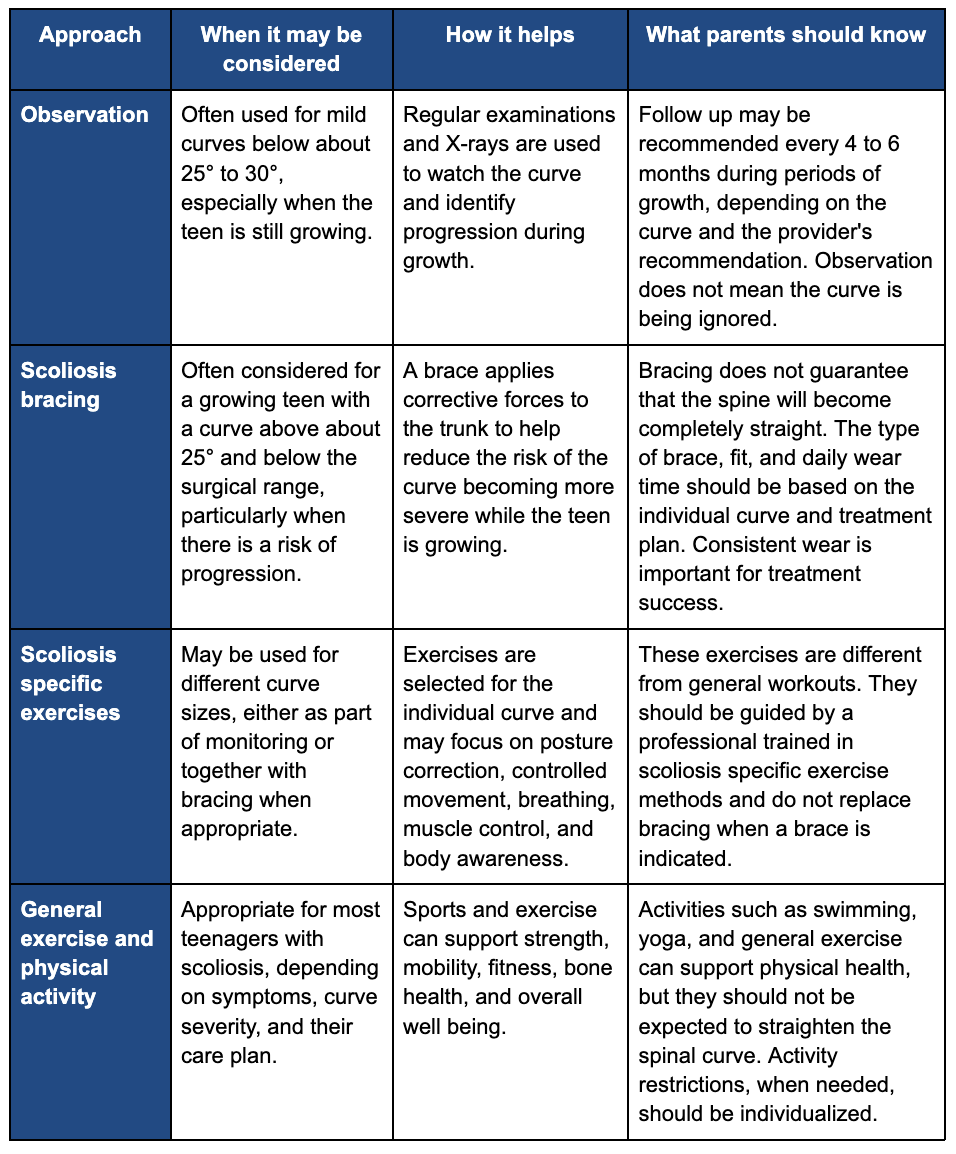
Not every teenager with scoliosis needs surgery. The right approach depends on the size of the curve, whether it is progressing, how much growth remains, and the teen’s individual needs.
Why early evaluation matters
Early evaluation helps families understand what is happening while a teenager is still growing.
It can answer three important questions:
- Is the visible posture change actually scoliosis?
- How large is the spinal curve?
- Is the teenager still at risk for progression?
The answers can help determine whether observation, bracing, supportive care, or specialist evaluation is appropriate. Finding scoliosis early does not mean aggressive treatment will be necessary.
Supporting your teenager with scoliosis
Scoliosis in teenagers can look different from one person to another. Some teens only need monitoring, while others may benefit from bracing or additional care. Understanding the curve and how much growth remains can help families make informed decisions.
At CorePosture Chiropractic, we assess spinal alignment and posture before discussing conservative options that may fit into a teenager’s overall care plan. When appropriate, this may include care focused on posture and scoliosis bracing.
If you have noticed uneven shoulders, hips, ribs, or other posture changes in your teenager, you can contact us to discuss an evaluation and appropriate next steps.
Frequently asked questions about scoliosis in teenagers
What age does scoliosis usually appear?
Adolescent idiopathic scoliosis occurs between ages 10 and 18. It often becomes noticeable during periods of rapid growth.
What are the first signs of scoliosis in a teenager?
Common signs include uneven shoulders or hips, an uneven waist, one prominent shoulder blade, or one side of the ribs appearing higher when bending forward.
Can bad posture cause scoliosis in teenagers?
No. Poor posture can make the body appear uneven, but it does not cause adolescent idiopathic scoliosis.
Can scoliosis get worse during puberty?
Yes. Some curves can progress during rapid growth. Curve size and the amount of growth remaining help healthcare providers estimate this risk.
Does every teenager with scoliosis need a brace?
No. Mild curves may only need monitoring. Bracing may be considered when a growing teenager has a curve with a higher risk of progression.
Can teenagers with scoliosis play sports?
In many cases, yes. Most teens can remain physically active, although recommendations may vary based on symptoms, curve severity, and treatment.

Dr. Tyler Meier is a board-certified, licensed chiropractor and founder of CorePosture Chiropractic in Newport Beach, CA