Last Modified on September 30, 2026 by Dr. Tyler Meier
L4-L5 Herniated Disc: Symptoms, Causes and Treatment Options
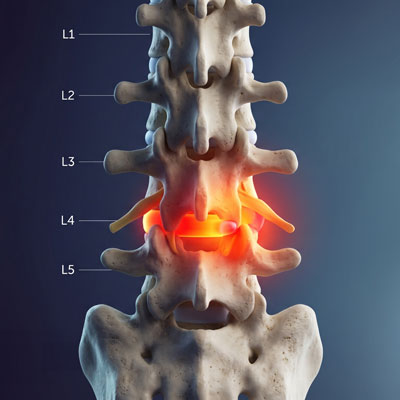
An L4-L5 herniated disc affects the disc between the fourth and fifth vertebrae in the lower back. When displaced disc material irritates or compresses a nearby nerve, symptoms may include lower back pain, leg pain, tingling, numbness, or weakness.
Not every disc herniation causes symptoms. The location of the disc material, the nerve involved, and the person’s overall spinal health can all affect how the condition feels.
At CorePosture Chiropractic in Newport Beach, we consider symptoms, neurological findings, posture, and spinal mechanics together when determining whether conservative care may be appropriate.
What is an L4-L5 herniated disc?
L4 and L5 are two vertebrae in the lumbar spine. Between them is an intervertebral disc that acts as a cushion and helps the lower back handle pressure during sitting, walking, bending, and lifting.
Each disc has a tough outer layer surrounding softer material in the center. A herniated disc occurs when some of the inner material pushes through a weakened or damaged area of the outer layer.
At the L4-L5 level, displaced disc material can irritate a nearby nerve root. The L5 nerve root is commonly affected, which is why symptoms may travel from the lower back into the leg and foot.
Types of L4-L5 disc herniation
Terms such as bulge, protrusion, extrusion, and sequestration may appear on an MRI report. They describe different patterns of disc displacement.
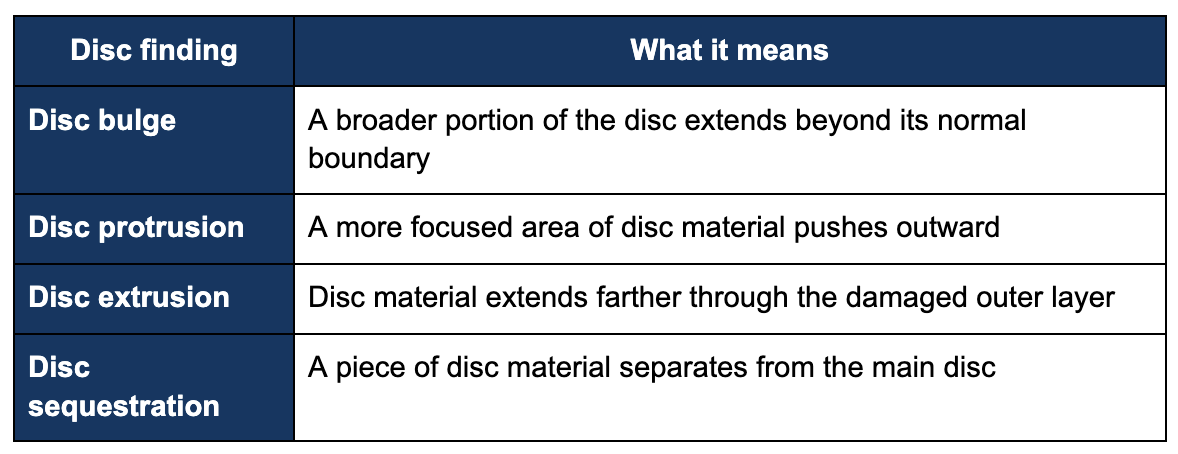
A disc bulge and a disc herniation are not exactly the same finding. More importantly, the type or size seen on MRI does not always predict how much pain a person will experience. Imaging needs to be considered together with symptoms and examination findings.
What causes an L4-L5 disc to herniate?
An L4-L5 disc can herniate after an injury, but many cases develop as the disc gradually changes over time.
Age related changes can reduce the disc’s ability to tolerate repeated stress. A movement that once caused no problem may then place more strain on a weakened area.
Common contributing factors include:
- Repeated bending and lifting
- Heavy lifting combined with twisting
- Sudden injury or trauma
- Repetitive physical work
- Frequent loading during certain sports
- Age related disc degeneration
There is not always one obvious cause. Symptoms may begin after a particular movement even when changes in the disc were already developing beforehand.
What are the symptoms of an L4-L5 herniated disc?
Symptoms depend on where the disc material moves and whether it affects a nearby nerve. Some people have mainly lower back pain, while others develop symptoms that extend into the leg.
Lower back and leg pain
Pain may stay around the lower back or travel into the buttock and leg. Nerve related pain is often described as sharp, burning, shooting, or electric.
Sitting, bending, coughing, or certain movements may increase symptoms. An L4-L5 herniation can also contribute to sciatica, although disc problems are not the only reason sciatica can flare up.
Numbness, tingling and weakness
Nerve irritation may cause tingling or numbness along the leg or top of the foot. More significant nerve involvement can also affect muscle strength, making some ankle, foot, or big toe movements harder.
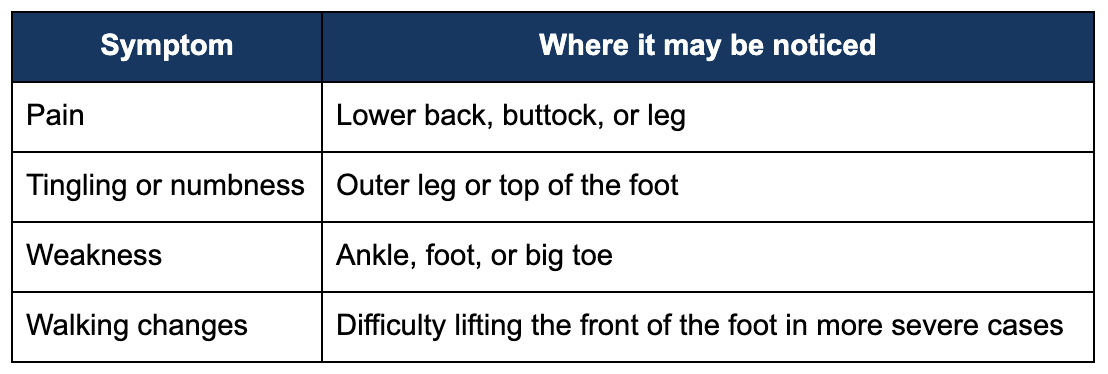
These patterns can provide useful clues, but symptoms can overlap between nerve roots. Their location alone cannot confirm which spinal level is affected.
How is an L4-L5 herniated disc diagnosed?
Diagnosis should connect a person’s symptoms with physical findings and, when necessary, imaging.
Physical and neurological examination
An examination may assess lower back and leg movement, muscle strength, sensation, reflexes, walking pattern, and positions that reproduce symptoms. Orthopedic or nerve tension tests may also be used when appropriate.
MRI and X-rays
MRI can show discs, nerve roots, and other soft tissues, making it useful when detailed imaging of a suspected herniation is needed.
X-rays have a different role. They show bone structure, spinal alignment, and certain degenerative changes, but they do not directly show a herniated disc the way an MRI can.
An abnormality on imaging is not automatically the source of pain. The finding needs to match the clinical picture.
Treatment options for an L4-L5 herniated disc
Treatment depends on the severity of symptoms, neurological findings, overall health, and how much the condition affects daily function.
Activity modification and rehabilitation
Complete bed rest is generally not the goal. Gentle movement and gradual return to activity may be appropriate as symptoms allow.
Rehabilitation may include exercises for mobility, strength, and movement control. The appropriate exercises depend on how symptoms respond rather than one standard routine for every disc herniation.
Chiropractic care and spinal decompression
For appropriate patients, chiropractic care may be part of a conservative treatment plan. The focus is on function and mechanical factors that may be contributing to symptoms rather than treating an MRI finding alone.
At CorePosture, care may include chiropractic adjustments, corrective exercises, and computerized spinal decompression based on examination findings.
Spinal decompression uses controlled traction to change mechanical loading on the spine. It does not simply push a herniated disc back into place, and it is not appropriate for every patient.
When medical or surgical care may be considered
Persistent severe pain, progressive weakness, or significant neurological changes may require evaluation by a medical specialist. Depending on the condition, additional treatment may include medication, injections, or surgery.
What can you do at home with an L4-L5 herniated disc?
Staying gently active is often more practical than spending long periods in bed. Short walks may be easier to tolerate than prolonged sitting.
Change sitting positions regularly and be careful with repeated bending, heavy lifting, and twisting movements that clearly increase leg symptoms.
For sleep, some people are more comfortable on their back with support beneath the knees. Others prefer lying on their side with a pillow between the knees. There is no single sleeping position that works for everyone.
Increasing numbness, weakness, or radiating pain is a reason to stop an activity and seek appropriate evaluation.
L4-L5 herniated disc care at CorePosture Chiropractic
At CorePosture Chiropractic in Newport Beach, we evaluate your symptoms along with posture, spinal alignment, and orthopedic and neurological findings to determine whether conservative chiropractic care may be appropriate.
When appropriate, a personalized care plan may include chiropractic adjustments, customized postural exercises, or computerized spinal decompression. The approach depends on your examination findings, symptoms, and how the condition is affecting your daily activities.
If lower back or leg symptoms continue to interfere with your daily life, contact us to schedule an evaluation.
Frequently asked questions
How long does an L4-L5 herniated disc take to heal?
Recovery time varies. Some people improve over several weeks, while symptoms can last longer when nerve irritation is more significant. The severity of symptoms, neurological involvement, activity level, and overall health can all affect recovery.
Is walking good for an L4-L5 herniated disc?
Walking can be a useful form of gentle activity when it does not significantly increase symptoms. Start with a comfortable amount and reduce or stop the activity if leg pain, numbness, or weakness clearly worsens.
Can an L4-L5 herniated disc cause sciatica?
Yes. An L4-L5 herniated disc can irritate a nerve root that contributes to the sciatic nerve, causing pain, tingling, or numbness that travels from the lower back or buttock into the leg.
What movements should you avoid with an L4-L5 herniated disc?
Avoid movements that consistently increase radiating pain or neurological symptoms. Repeated bending, heavy lifting, and twisting under load may aggravate symptoms in some people, but specific restrictions should depend on the individual condition.

Dr. Tyler Meier is a board-certified, licensed chiropractor and founder of CorePosture Chiropractic in Newport Beach, CA