Last Modified on November 27, 2026 by Dr. Tyler Meier
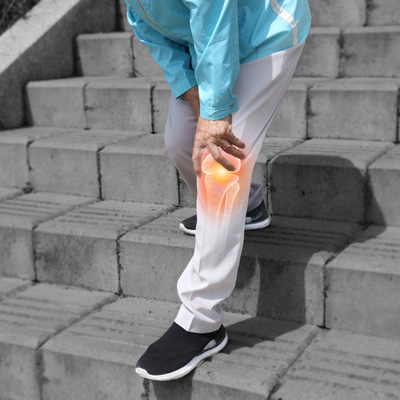
Knee pain when going down stairs can make everyday movements uncomfortable. You may feel aching, stiffness, or sharp pain around your kneecap as you step down.
At CorePosture Chiropractic, we help patients understand musculoskeletal discomfort and explore personalized care options.
Here are the common causes, practical relief tips, and signs that you may need professional care.
Why does your knee hurt when going down stairs?
Walking downstairs places pressure on your knee joints as your leg muscles control your body weight. This movement can irritate sensitive tissues around the kneecap, especially if you have an existing knee condition.
How your kneecap and thigh muscles work on stairs
Your kneecap moves along your thigh bone as your knee bends. When you step down, your thigh muscles control this movement and help keep your knee stable.
If the tissues around your kneecap become irritated, you may experience pain during stair descent.
How muscle weakness can affect knee movement
Your hip and thigh muscles support your knees during walking and other activities. Weakness or fatigue in these muscles can make it harder to control knee movement, potentially increasing discomfort.
However, knee pain can also result from joint conditions or injuries.
Common causes of knee pain when going down stairs
Several conditions can cause knee pain during stair descent. The location of your pain and other symptoms may help identify possible causes.
Patellofemoral pain syndrome
Also called runner’s knee, this condition causes pain around or behind the kneecap. Symptoms often worsen when walking downstairs, squatting, running, or sitting with bent knees for long periods.
Knee osteoarthritis
Knee osteoarthritis involves changes in cartilage and other joint tissues. It may cause pain, stiffness, swelling, and difficulty moving your knee.
Walking downstairs can make these symptoms more noticeable because your knee must support and control your body weight.
Our article about chiropractic care for arthritis discusses supportive care considerations for arthritis-related joint discomfort.
Patellar tendinopathy
Patellar tendinopathy affects the tendon connecting your kneecap to your shinbone. Repeated stress from jumping, running, or frequent knee bending can contribute to this condition.
Common symptoms include pain below the kneecap, tenderness, and discomfort during physical activity.
Meniscus injuries
The meniscus is cartilage that cushions your knee joint. An injury may occur from twisting your knee or gradual changes in the tissue.
Symptoms may include pain along the inner or outer knee, swelling, stiffness, or catching sensations during movement.
How to relieve knee pain when going down stairs
The right approach depends on the cause of your discomfort. Mild symptoms may improve with simple changes to your daily activities.
Reduce pain with simple home care
Try these steps to manage knee discomfort:
- Modify activities: Temporarily reduce movements that worsen your pain.
- Apply ice: Use a cold pack wrapped in a towel for 15 to 20 minutes when appropriate.
- Stay gently active: Comfortable walking and light movement can help maintain mobility.
- Return gradually: Increase your activity level as symptoms improve.
Avoid pushing through severe pain or worsening swelling.
Strengthen your hips and thigh muscles
Strengthening the muscles around your hips and knees may improve movement control.
Exercises that may help include:
- Straight leg raises: Strengthen your thigh muscles.
- Seated knee extensions: Support knee movement and muscle control.
- Glute bridges: Strengthen your hip muscles.
- Supported mini squats: Practice controlled knee bending.
Choose exercises based on your symptoms and stop if pain increases.
Use safer techniques when walking downstairs
Small adjustments can make stair descent more comfortable:
- Hold the handrail for support.
- Take slow, controlled steps.
- Avoid skipping steps or rushing.
- Use one step at a time if needed.
- Lead with your painful leg when stepping down one step at a time.
If stair descent remains painful, consider a professional assessment.
Can posture and body alignment affect knee pain?
Your hips, knees, and ankles work together to support movement. Limited joint mobility, muscle weakness, or changes in movement patterns may affect how pressure is distributed through your knees.
Posture and body alignment can influence movement, but they are not necessarily the cause of knee pain.
Understanding how your joints and muscles work together may help identify factors contributing to discomfort.
Can chiropractic care help with knee pain?
Chiropractic care may support some patients experiencing musculoskeletal discomfort, depending on the underlying cause.
At CorePosture Chiropractic, we focus on understanding symptoms, posture, and mobility to help patients explore appropriate care options.
Our approach may include:
- Assessing posture and movement patterns
- Evaluating related joint mobility
- Providing guidance on daily movements
- Recommending appropriate exercises
- Referring patients for medical evaluation when necessary
Chiropractic care is not a replacement for medical treatment of significant knee injuries or joint disease.
When should you see a doctor for knee pain?
Consider a medical evaluation if you experience:
- Knee pain that persists or worsens
- Repeated swelling or stiffness
- Difficulty bending or straightening your knee
- Knee instability or locking
- Pain that limits walking or daily activities
Seek urgent medical care if you cannot bear weight, have severe swelling after an injury, notice a knee deformity, or develop fever with a hot, swollen knee.
Get personalized care for knee discomfort in Newport Beach
Knee pain when going down stairs may result from muscle strain, joint irritation, or an underlying knee condition. Identifying the cause can help guide appropriate care.
At CorePosture Chiropractic, Dr. Tyler Meier, DC, a licensed chiropractor and certified Chiropractic BioPhysics practitioner, provides personalized care focused on posture, mobility, and musculoskeletal health.
If knee discomfort is affecting your daily activities, contact us to discuss your symptoms and explore suitable care options.
Frequently asked questions
Why does my knee hurt going down but not up stairs?
Walking downstairs requires your thigh muscles to control knee bending, which can increase pressure around the kneecap and cause discomfort.
Can knee pain when going down stairs go away on its own?
Mild knee pain may improve with activity changes and gentle movement. Persistent or worsening symptoms should be evaluated.
What exercises help with knee pain on stairs?
Straight leg raises, seated knee extensions, glute bridges, and supported mini squats may help when appropriate for your condition.
Can a chiropractor help with knee pain?
A chiropractor may assess related musculoskeletal issues and offer movement guidance. Some knee conditions require medical treatment or physical therapy.

Dr. Tyler Meier is a board-certified, licensed chiropractor and founder of CorePosture Chiropractic in Newport Beach, CA